
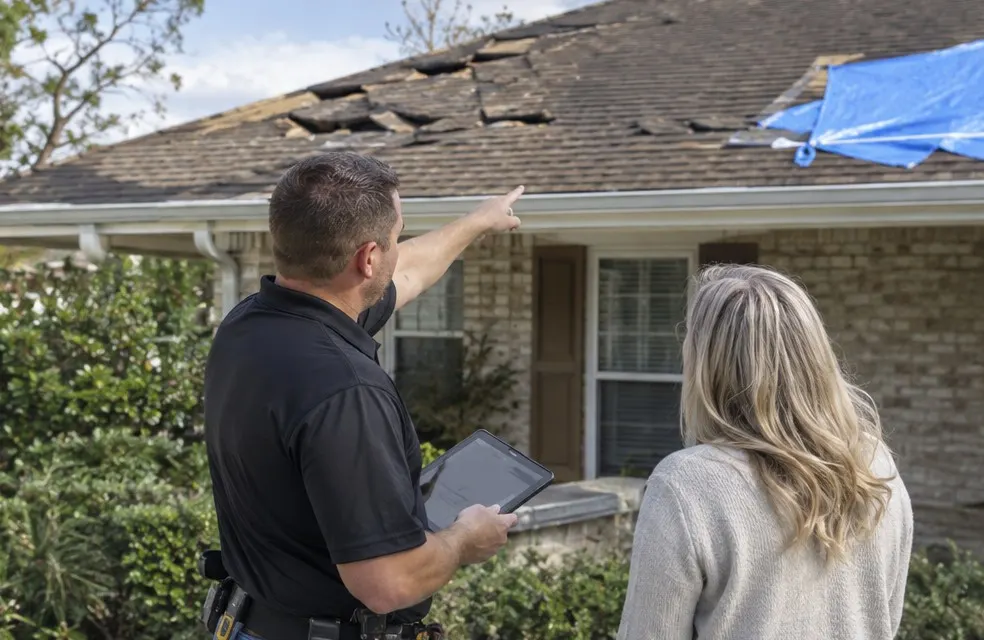
A good share of roofs replaced after storms are paid partly by insurance. For a small roofing company, these jobs can fill a season. They can also bring slow payments, angry homeowners and legal trouble if you do them carelessly. This is how they usually work and where to be careful. Rules vary by state, so check yours.
Who does what
- The homeowner owns the policy, files the claim and makes the decisions
- The insurer's adjuster inspects the roof and decides what is covered
- You, the roofer, inspect, document the damage, attend the adjuster meeting if the homeowner asks, and do the work
In many states, a contractor cannot negotiate a claim on the homeowner's behalf unless they are also a licensed public adjuster. Know your state's line before you get involved.
Step 1: inspect and document
Get on the roof and photograph everything: hail hits on shingles, soft metal, vents and gutters, missing tabs, creased shingles from wind, interior stains. Mark test squares if that is common in your area. Write down the roof age, the layers and the pitch.
Be honest. If the damage is minor and the repair costs less than the deductible, say so. A $640 repair against a $2,000 deductible does not need a claim. The homeowner will remember that you told them.
Step 2: the homeowner files
The homeowner calls their insurer. You can explain what you found, but do not tell them their roof will be covered. Many policies have percentage deductibles for wind and hail, often 1 to 2 percent of the home's insured value, which can be several thousand dollars.
Step 3: the adjuster meeting
If the homeowner wants you there, meet the adjuster on the roof. Point out what you documented. Stay factual and calm. The adjuster writes the scope: what gets repaired or replaced, and the price the insurer will pay.
Step 4: read the scope
Insurance estimates commonly show two numbers:
- Replacement cost value (RCV): what it costs to replace the roof
- Actual cash value (ACV): RCV minus depreciation for age
On many policies, the insurer first pays ACV minus the deductible, then releases the withheld depreciation after the work is done and the final invoice is submitted. Some policies only pay ACV. Make sure the homeowner understands which one they have.
If the scope misses items, like drip edge, code upgrades or a second layer, the homeowner can ask the insurer to review it. That is called a supplement. How involved you can be depends on your state.
Step 5: contract and deposit
Your contract is with the homeowner, not the insurer. Price it from your normal rates and scope. The homeowner owes you the full contract price; the insurance money and their deductible are how they pay it. Take a deposit when they sign, within your state's limit.
Step 6: the deductible
The homeowner pays the deductible. Do not waive it, rebate it, hide it in a fake discount or "cover it with a free upgrade". In many states that is illegal, and it can be treated as insurance fraud.
Step 7: payment
Insurance checks are often made out to the homeowner and their mortgage company together, which can slow things down. Plan your cash flow for it. Send the balance invoice when the job is done, and let the homeowner pay what they can by card or the rest by check when the mortgage company endorses it.
What software can and cannot do
RoofPilot does not file claims, talk to adjusters or write supplements. It does the parts around the claim: answering the storm call at night, booking the inspection, sending the deposit and balance invoices and asking for a review when the roof is done. Keep your photos, scope and claim paperwork in the system you already use.
When the ballpark helps
Homeowners often want to know what a roof costs before deciding whether to file. A ballpark on your site, from a roof replacement cost calculator, helps them compare the roof price to their deductible. On a 2,000 square foot footprint in shingles, the sample rates show about $13,500. A 2 percent deductible on a $300,000 home is $6,000. That math helps them decide, and it is their decision.
Keep the reputation
Insurance jobs are where some roofers cut corners. The ones who stay honest, explain the process and never promise coverage end up with the referrals. Read roofing storm season for handling the call volume.
Frequently asked questions
Can a roofer talk to my insurance company for me?
It depends on the state. In many states only a licensed public adjuster can negotiate a claim for a homeowner. A roofer can usually show the adjuster the damage when the homeowner asks.
Who pays the deductible on an insurance roof job?
The homeowner. Contractors offering to waive or absorb the deductible is illegal in many states.