
Satellite roof measuring changed how many roofers work. A homeowner can outline their own roof on a map and see a ballpark in a minute. But the map is a photo from above, and roofs are not flat. Knowing exactly what it measures, and what it misses, is how you use it without burning trust.
What the satellite outline measures
When someone traces the roof on a satellite map, they get the footprint: the area the roof covers, seen from straight above, eaves included if they trace to the edge. It also shows:
- The roof shape: a simple gable, a hip roof, or a cut-up roof with many valleys
- Attached garages, porches and additions that are part of the job
- Trees hanging over the roof, which matter for debris, access and wear
- Rough house size, to compare with what the homeowner told you
On a clear image, the footprint is usually close. That is enough for a first number.
What it cannot see
- Pitch. This is the big one. A 4/12 roof and a 10/12 roof can have the same footprint, but the steep one has about 24 percent more surface (factor 1.30 against 1.05). On a 2,000 square foot footprint that is about 21 squares against 26
- Layers. One layer of shingles or two is invisible from above
- Decking. Soft or rotten plywood shows up only at tear-off, or by walking the roof
- Flashing and details. Chimney flashing, step flashing, skylights and valleys need a close look
- Ventilation. Intake and exhaust problems that affect warranties
- Image age. Satellite photos can be a year or more old. An addition or a new garage may not be there
How to use both
The best workflow uses the map for the first conversation and the roof for the contract:
- The homeowner outlines the roof on your site and picks the material. They see your ballpark, with a clear note: "confirmed on site"
- They add what they know: a steep roof, two stories, two layers. The calculator adds your price for each
- You get the lead with the address, the footprint, the material and the price they saw
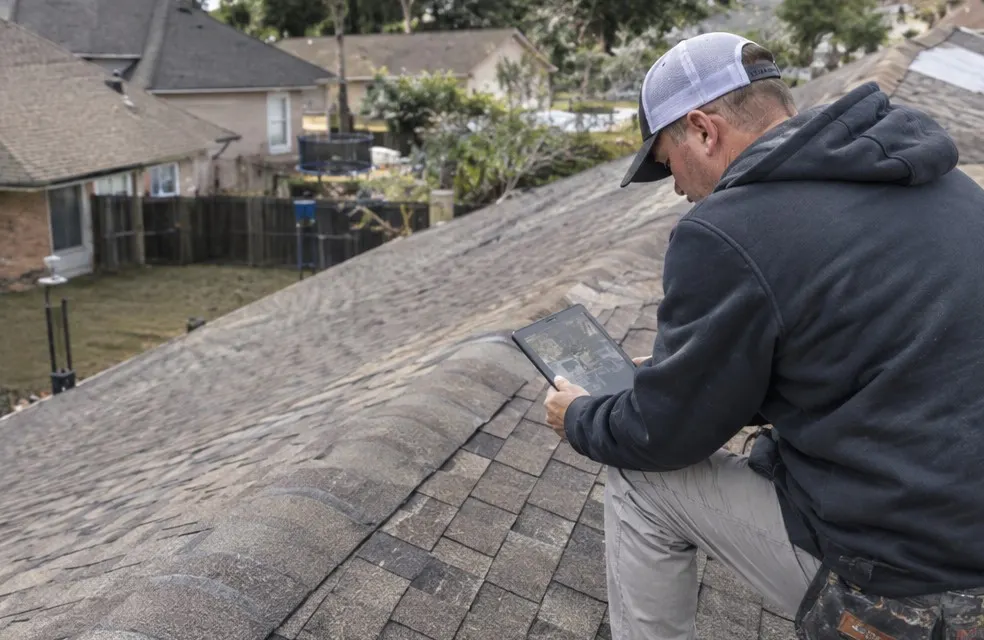
- You inspect and measure pitch, count layers, walk the deck, look at the flashing
- You write the contract with the real numbers
How close is the ballpark?
At the sample rates in our roof replacement cost calculator, a 2,000 square foot footprint in shingles comes to about $13,500, shown as a range of $12,100 to $15,600. Those rates assume a walkable pitch around 4/12 to 7/12 and one layer.
If the inspection finds an 8/12 pitch, the steep pitch extra adds $2,000. A second layer adds $1,500. Five sheets of decking add $600. Each of those is a line the homeowner could have chosen on the calculator, so a higher final number is not a surprise; it is the price they already saw for that roof.
Paid aerial reports
There are paid aerial roof measurement reports that estimate pitch and facets from several images. Some roofers order them for bigger jobs or to save a climb. They cost money per report and they are a different tool from a homeowner tracing a footprint on your site. Either way, many roofers still confirm on site before signing.
Saying it honestly
What hurts trust is a number that changes without a reason. What builds it is a range, a clear note about what the map cannot see, and a final price that matches the extras you found. Put it on your site in plain words: "This is a ballpark from the footprint. We confirm pitch, layers and decking on the roof before you sign."
Why roofers use it anyway
Because it sorts the calls. Homeowners who see $13,500 and book an inspection have a budget that fits. The ones who wanted a $5,000 roof stop at the calculator instead of taking your afternoon. Read how much to charge per square to set your rates, and try the roofing calculator to turn a footprint into squares. The roofing estimate software page shows how it works on your site.
Frequently asked questions
Can you measure a roof from satellite images?
You can measure the footprint from above. Pitch, layers and decking condition are not visible, so the real roof area and price are confirmed on site.
How much does pitch change the roof area?
A lot. A 6/12 roof has about 12 percent more surface than its footprint, an 8/12 about 20 percent and a 12/12 about 41 percent.