
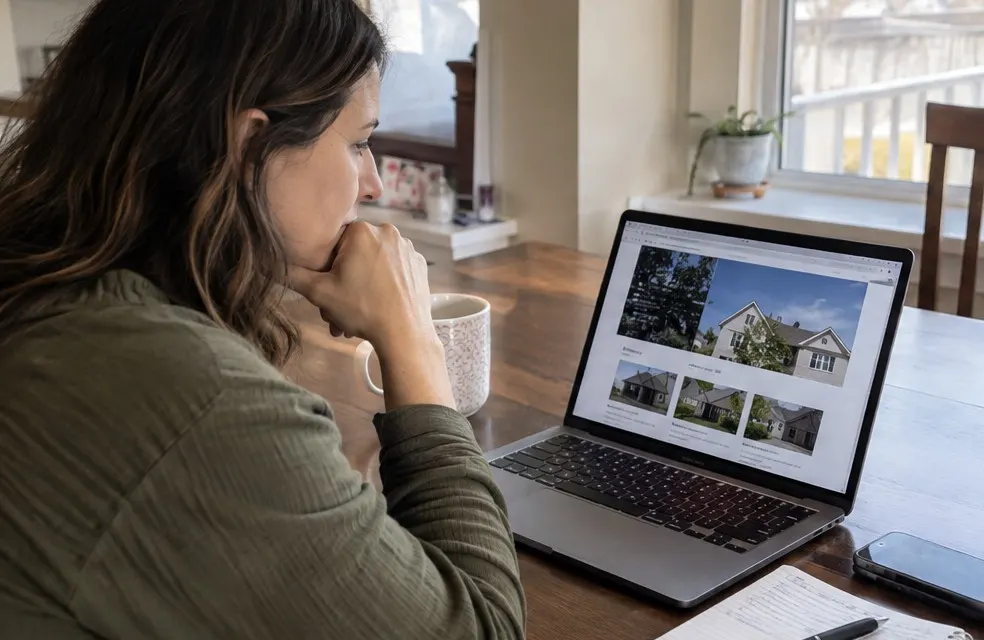
Homeowners do not pick a roofer from a flyer. They take the flyer, or the name from a neighbor, and look it up on their phone. In about a minute they decide whether you look like a real local company that will still be around for the warranty. This checklist covers what that minute needs.
Above the fold
On a phone, without scrolling, a homeowner should see:
- What you do and where: "Roof replacement and repair in Tulsa and Broken Arrow"
- A phone number they can tap
- One clear next step: see a ballpark, or book an inspection
- A photo of a real roof you did, not a stock image of a smiling model
Trust, early
- License number, written out, with the state
- Insurance: "Licensed and insured" is a start; offering a certificate on request is better
- Warranty: your workmanship warranty in years, and the manufacturer warranty you can offer if you are certified
- Local address or at least the towns you serve
- Years in business and the owner's name
After a storm, out-of-town crews flood every neighborhood. A real address, a license number and an owner's name tell the homeowner you are local.
A ballpark price
Most roofing sites say "call for a free estimate". The homeowner reading at 10 p.m. wants a number. A calculator where they outline the roof on the satellite map, pick shingles, metal or tile, and see a range answers the question while the other sites stay silent.
Say what the number is: a ballpark from the footprint, confirmed on site. At sample rates, a 2,000 square foot footprint in shingles shows about $13,500. Being clear about what the map cannot see, pitch, layers, decking, is what makes the number believable. See the roof replacement cost calculator to try it.
A page for each service
One page each for roof replacement, roof repair, metal roofing, tile, storm damage, gutters and inspections. Each with:
- What the job includes
- Photos of that job
- A price range or a "from" price
- A button to book
Someone searching "metal roof installer" should land on your metal page.
A page for each town
A short page for each town you serve, with roofs you did there and the common roof types and weather in that area. This is how small companies show up for "roofer in [town]".
Photos, real ones
- Finished roofs from the street
- Tear-off and decking, proof you replace bad wood
- Your crew, your truck and your dumpster with your name
- Repairs, close up
Reviews
Show recent Google reviews on the site, or link to your profile. Read Google reviews for roofers.
Fast and simple on a phone
- Loads in a couple of seconds on a phone
- Short forms: name, phone, address, what they need
- No pop-ups covering the page
Leads go straight to you
Every form and calculator lead should go to your phone by text and email, with the address and what they asked for. A lead that sits in an inbox until Friday is gone.
Booking
Let homeowners book an inspection slot directly from the site. Read about roofing scheduling software.
Language
If many homeowners in your area speak Spanish or Portuguese, a site in their language, with a receptionist who answers in it, is a real advantage.
Answer the questions before they ask
A short FAQ on each service page saves calls and builds trust: How long does a replacement take? (Usually one to two days for a typical home.) Do you haul everything away? What happens if you find rotten decking? Do you work with insurance claims? Do you offer financing? Only answer what is true for your company.
Your own domain
Use your own .com, not a free subdomain. It looks like a real company and it is yours if you ever change providers.
A blog that answers questions
Short articles answering what homeowners search, like "how much does a new roof cost in Tulsa" or "signs of hail damage", bring visitors months before they need a roof. See roofing leads without door knocking.
Check yours in five minutes
Open your site on your phone and pretend you have a leak. Can you find the phone number in one second? Can you see who you are, your license and a price? Can you book? If not, see what a roofing company website from RoofPilot includes.
Frequently asked questions
What should a roofing website include?
What you do and where, a tap-to-call number, license and insurance, real photos, a ballpark price or calculator, a page for each service and town, reviews and an easy way to book an inspection.
Should a roofer show prices on their website?
A ballpark range helps. It sorts serious homeowners from curious ones, as long as you say clearly that the final price is confirmed on site.